Catégorie : Bookkeeping

Types and Purpose of Adjusting Entries

Adjusting entries also helps comply with accounting standards, provide a complete picture of the business, facilitate better decision-making, and improve financial analysis. Adjusting entry for prepaid expenses involves debiting an expense account and crediting an asset account. Adjusting entry for deferred expenses involves debiting an expense account and crediting an asset account.

  • In accrual accounting, revenues and the corresponding costs should be reported in the same accounting period according to the matching principle.
  • Another very common adjusting entry that converts an asset into an expense is the recording of depreciation on fixed assets, because depreciation is the process of allocating an asset’s cost to the years of its useful economic life.
  • This software is essential for detailed accounting tasks.
  • The fastest approach is to maintain a standardized closing checklist, review recurring accruals first, then reconcile prepaid and unearned balances.
  • This process requires careful attention, as errors in the initial recording can lead to greater complications later in the financial cycle.
  • Deferrals are prepaid expense and revenue accounts that have delayed recognition until they have been used or earned.

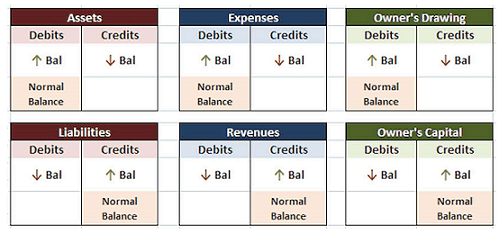
( . Adjusting entries that convert assets to expenses:

The process of comparing the amounts in the Cash account in the general ledger to the amounts appearing on the bank statement. A current asset account which includes currency, coins, checking accounts, and undeposited checks received from customers. Invoice terms such as (a) net 30 days or (b) 2/10, n/30 signify that a sale was made on account and was not a cash sale.

The amount of insurance that was incurred/used up/expired during the period of time appearing in the heading of the income statement. Interest earned by a bank is considered to be part of operating revenues. If the revenues earned are a main activity of the business, they are considered to be operating revenues. Revenue accounts are credited when services are performed/billed and therefore will usually have credit balances.

Mistakes require correcting entries. For many small businesses, combining Excel tracking with professional bookkeeping services offers the best balance of affordability and accuracy. These examples show how adjustments prevent distorted financial results. These adjustments transform raw transaction data into a more accurate financial picture. This could result in incorrect financial decisions and potential issues with tax reporting and compliance.

Since accounting views a company as an entity that operates indefinitely, the time period assumption requires it to divide its business operations into equal time intervals called accounting periods. It influences the reliability of the information that is presented in your company’s financial statements. The Accounting Cycle refers to the steps that a company takes to prepare financial statements. An estimation adjusting entry is used to adjust the balance in a reserve.

Mastering the Mechanics: Practical Examples of Adjusting Entries in Accounting

When expenses are prepaid, a debit asset account is created together with the cash payment. For deferred revenue, the cash received is usually reported with an unearned revenue account. There are also many non-cash items in accrual accounting for which the value cannot be precisely determined by the cash earned or paid, and estimates need to be made.

If a company receives payment in advance for a product or service it has yet to deliver, it must record this payment as a liability until the service is performed. This approach allows businesses to properly align their financial reports with the timing of economic events. Understanding and implementing these adjustments effectively helps businesses maintain transparency and accuracy in their financial reporting. According to the Journal of Accountancy, companies that accurately implement accrual adjustments are 30% more likely to achieve their financial targets.

This is crucial for a truthful reflection of your company’s financial activity during a specific period. Without these adjustments, your income statement might present a distorted view of earnings, and your balance sheet could misrepresent assets or liabilities. They connect your daily transactions, such as sales or purchases, to the bigger picture—your financial statements. The resulting monthly depreciation expense would be $1,000. They usually have a useful life of more than a year and are classified as non-current assets in the statement of financial position or balance sheet.

  • Companies that invest in staff training often report a decrease in errors and an improvement in overall financial statement reliability.
  • Each month’s financials will show a slice of that office cost, aligning with the space provided during the period.
  • To illustrate this concept further, let’s explore an example of an adjusting journal entry that highlights its purpose and importance.
  • 1,500, and depreciation will be subtracted from this figure the next year.
  • Following the straight-line depreciation method, the company would need to record $4,000 of depreciation expense each year over the equipment’s useful life.

A company buys a $2,000 computer on June 13th with a 4-year useful life. They have the cash, but they haven’t delivered the goods. The expense happened in March, so it needs to be recorded in March. They’ve earned the money, so they have to book it. Revaluation entries adjust the book value of assets or liabilities to what they’re actually worth in the current market. It’s the financial equivalent of admitting that your shiny new computer won’t be shiny or new forever.

What Impact Do Adjusting Entries Have on Financial Statements?

Additionally, periodic reporting and the matching principle necessitate the preparation of adjusting entries. They match income and expenses on the income statement. The matching principle requires pairing expenses with the revenues they generate.

An entry made at the end of an accounting period to recognize an income or expense in the period that it is incurred After preparing all necessary adjusting entries, they are either posted to the relevant ledger accounts or directly added to the unadjusted trial balance to convert it into an adjusted trial balance. The preparation of adjusting entries is the fifth step of the accounting cycle that starts after the preparation of the unadjusted trial balance. Without adjusting entries, financial statements can be misleading. Adjusting entries are journal entries made at the end of an accounting period to update accounts that are incomplete, misstated, or recorded in the wrong period. The primary purpose of adjusting entries is to update account balances to conform with the accrual concept of accounting.

Similarly, the accountant might say, “We need to prepare an accrual-type adjusting entry for the revenues we earned by providing services on December 31, even though they will not be billed until January.” The income statement account balance has been increased by the $3,000 adjustment amount, because this $3,000 was also earned in the accounting period but had not yet been entered into the Service Revenues account. The two examples of adjusting entries have focused on expenses, but adjusting entries also involve revenues. Another situation requiring an adjusting journal entry arises when an amount has already been recorded in the company’s accounting records, but the amount is for more than the current accounting period. An adjusting entry is needed so that December’s interest expense is included on December’s income statement and the interest due as of December 31 is included on the December 31 balance sheet. To demonstrate the need for an accounting adjusting entry let’s assume that a company borrowed money from its bank on December 1, 2025 and that the company’s accounting period ends on December 31.

Accrued Expense

Hence the income statement for December should report just one month of insurance cost of $400 ($2,400 divided by 6 months) in the account Insurance Expense. The $2,400 transaction was recorded in the accounting records on December 1, but the amount represents six months of coverage and expense. When the exact value of an item cannot be easily identified, accountants must make estimates, which are also considered adjusting journal entries. If the rent is paid in advance for a whole year but recognized on a monthly basis, adjusting entries will be made every month to recognize the portion of prepayment assets consumed in that month. The adjusting entry is made when the goods or services are actually consumed, which recognizes the expense and the consumption of the asset.

However, Accounts Receivable will decrease whenever a customer pays some of the amount owed to the company. After further review, it is learned that $3,000 of work has been performed (and therefore has been earned) as of December 31 but won’t be billed until January 10. Let’s assume the review indicates that the preliminary balance in Accounts Receivable of $4,600 is accurate as far as the amounts that have been billed and not yet paid.

If a company’s stock is publicly traded, earnings per share must appear on the face of the income statement. We focus on financial statement reporting and do not discuss how that how to create a personal balance sheet differs from income tax reporting. You simply record the interest payment and avoid the need for an adjusting entry.

For instance, wages earned by employees but not yet paid at the end of the accounting period must be recorded as an accrued expense. These adjustments are crucial for providing an accurate portrayal of a company’s financial performance during an accounting period. It not only upholds the integrity of financial statements but also ensures compliance with accounting standards.

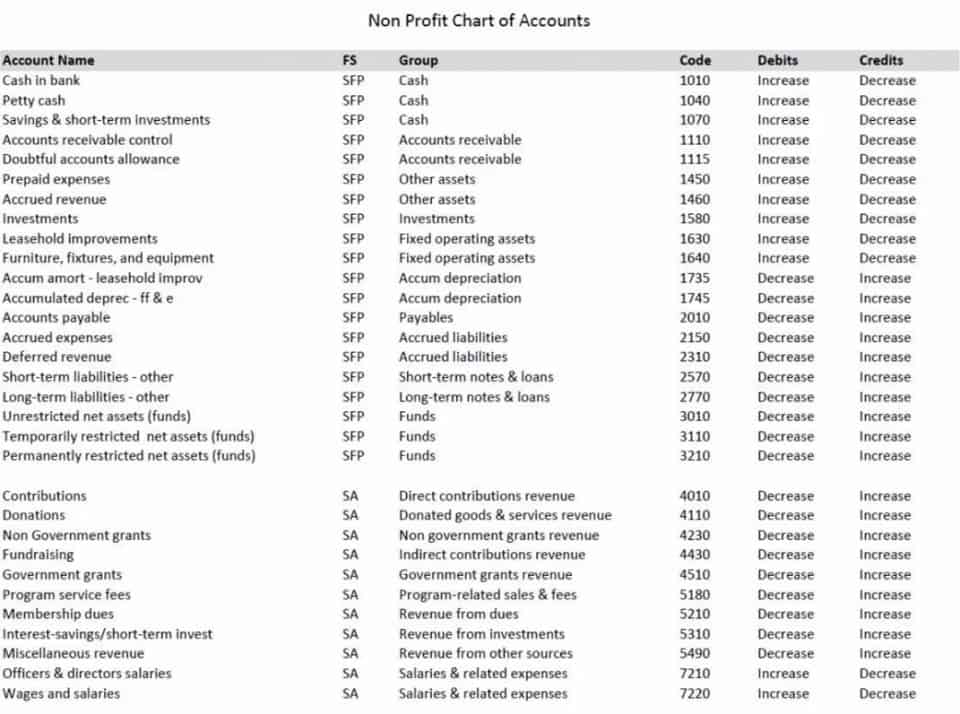
These expenditures are initially recorded by debiting an asset account (such as prepaid rent, prepaid insurance, office supplies, office equipment, etc.) and crediting the cash account. Businesses using accrual accounting do. Accurate adjustments support better decision-making, proper tax reporting, and compliance with accounting principles.

This entry directly reduces both accounts receivable and the allowance for doubtful accounts since it is already proven that the amount can no longer be recovered. The accounts receivable net realizable value of is the amount that you expect to receive from your customers after accounting for possible bad debts. This practice of recognizing bad debts is a normal business practice and is part of the operating expenses of a company. The resulting amount of $2,000 will be the subscription revenue that you have earned for the delivery of software services for the month of January 2023. Under the liability method, a liability or deferred income account is immediately credited upon receipt of the advance cash payment. Accrued rent income is recognized when the period covered by the rental payment has already passed even if no cash payment was still made by the customer.

Prepaid expenses occur when a company pays for goods or services in advance. Accrued expenses are costs that a company has incurred but hasn’t yet paid. Adjusting entries allow for better tracking of accounts receivable and payable.

In the journal entry, Supplies Expense has a debit of $100. T-accounts will be the visual representation for thePrinting Plus general ledger. Visit the website and take a quiz onaccounting basics to test your knowledge. The SEC’s complaintstates that Homex reported revenues from a project site where everyplanned home was said to have been “built and sold by Dec. 31,2011. Others leave what is overhead assets on thebooks instead of expensing them when they should to decrease totalexpenses and increase profit.

Read more


Types of inventory errors

A pallet of the product might be moved to another warehouse location. Misplaced inventory often happens due to changes in storage locations. Food items with expiration dates or those with a limited shelf life are two common examples. Overstocking means you have more stock on the shelves than needed to meet demand.

  • Empower them to detect warehouse inventory discrepancies and resolve problems on the spot.
  • When information doesn’t flow seamlessly between departments, discrepancies in stock levels and delayed orders become common inventory errors.
  • Inventory management systems can also make it easier to manage multiple warehouses or locations at once, as well as track orders and supply chain processes.
  • Human errors during data input represent a common source of inventory management errors.
  • When your brand records more or less inventory than you actually have, it means that your inventory’s value will be higher or lower than it actually is.

Data Entry Mistakes & Manual Errors

An inventory scanner that feeds back to a unified tracking system also lets your update inventory levels the moment inventory moves, so that inventory doesn’t get lost or misplaced in transition. Reducing the back-and-forth will minimize confusion, which will reduce the risk of errors. Lots of inventory issues are the result of human error in operations. When you fail to record a sale, you may accidentally assume you have more inventory than you actually do, and oversell products as a result. Failing to record a purchase may lead you to understate your inventory, which can lead you to overspend on overhead without realizing it or reorder stock too soon (leading to a lot of surplus inventory).

How Inventory Management Software Can Help

Harnessing the vast amounts of data generated by inventory systems can unlock powerful insights into the patterns and anomalies that often precede inventory shrinkage. It's a collaborative effort that, when executed well, can lead to significant improvements in inventory management and overall business performance. Late or early deliveries can disrupt inventory management and warehouse operations. Vendor compliance plays a pivotal role in the mitigation of receiving errors, which are a significant contributor to inventory shrinkage. Yet, it's a critical factor that can lead to significant inventory shrinkage, impacting a company's bottom line.

The use of technology in inventory management can also improve customer service. Automation helps to streamline the inventory management process and reduce the risk of human error. This not only minimizes the risk of stockouts but also reduces the need for manual inventory checks, saving time and resources. One of the most significant benefits of technology in inventory management is real-time tracking. In today's fast-paced and competitive market, companies cannot afford to have inaccurate inventory records, which can result in stockouts, overstocking, and ultimately, lost profits.

Start by regularly cross-checking your inventory records with actual stock levels and sales receipts. On the flip side, if a sale slips through without being logged in, you might think you have more items than you really do, leading to selling products that aren’t in stock. By integrating Teamship into your inventory management process, you can maintain accurate and compliant inventory records. The net effect of the two errors is a overstatement of ending inventory.

Just-in-Time (JIT) inventory management is a strategy that aligns raw material orders from suppliers directly with production schedules. This lack of clarity can lead to delayed shipments, unfulfilled orders, or even sending out the wrong items, all of which result in lost sales and dissatisfied customers. Many large retailers struggle to pinpoint and track their current stock levels.

How can companies rectify errors in inventory to maintain an accurate balance sheet?

Inventory errors can happen to even the most organized and efficient businesses. Inaccurate inventory records can make it difficult to accurately calculate the cost of goods sold, which can lead to inaccurate financial statements. For example, if a company overstocks a product and it goes unsold, the company may have to pay additional storage costs to keep the excess inventory. When inventory records are inaccurate, it can lead to stockouts or overstocking of products. Inventory errors can have a significant impact on a company's profit margins. This error can ultimately impact the bottom line and the overall financial health of the business.

Related topics to Intermediate Accounting

When information doesn’t flow seamlessly between departments, discrepancies in stock levels and delayed orders become common inventory errors. This critical inventory challenge creates a chain reaction of inventory errors, leading directly to both overstocking and unexpected stockouts, resulting in financial losses and customer dissatisfaction. Timely and accurate tracking of inventory levels helps businesses avoid unnecessary costs and navigate common inventory challenges, ensuring that products are in the right place at the right time. In this article, we’ll delve into the typical inventory management mistakes and issues that plague businesses, from the financial impact of understocking to the logistical nightmares of poor visibility. If a business consistently orders more stock than needed due to inventory errors, suppliers may struggle to meet the inflated demand or may impose penalties for last-minute order changes. Which measures can businesses take to prevent inventory errors?

Understanding these concepts is crucial for accurate financial reporting. I’m just stunned by how accurate our orders are, and our error rate is just vanishingly small now. With ShipBob, I what is gross monthly income feel like our error rate is a hundred times less.

  • For example, an employee may steal products or fail to record sales, leading to discrepancies in inventory levels.
  • If a business consistently orders more stock than needed due to inventory errors, suppliers may struggle to meet the inflated demand or may impose penalties for last-minute order changes.
  • Counting your inventory and comparing the result to your records allows you to detect inventory mismatches.
  • These methods have their conventions around recognizing and adjusting inventory errors, thereby forming part of the broader inventory error management framework.
  • An inventory error (also called an inventory discrepancy) is when your physical inventory count does not match the amount of inventory stated in your records.
  • With our state-of-the-art technology, you can say goodbye to the headaches of overstocking, understocking, and other costly errors.

This will result in an understatement of the cost of goods sold and thus an overstatement of net income. The goods sold to the customer should not have been included in inventory, resulting in an overstatement of year-end inventory. Again, the error corrected itself over two years, but the allocation of income between the two years was incorrect.

For example, if a damaged product is replaced, it’s taken from available inventory. This causes a discrepancy between inventory records and the shipping manifest. Shipping the wrong quantity than indicated on the order or shipping the wrong product affects inventory. Both can be largely mitigated using an effective warehouse management system.

Tools and Systems That Eliminate Inventory Mistakes

Partner with Qodenext to streamline your inventory processes, ensuring accuracy, reliability, and scalability at every step. Regular inventory checks and a centralised system are key to maintaining accuracy. This may mislead investors, affect tax liabilities, and even lead to regulatory assessment if the discrepancies are significant. However, it’s important to keep the processes secure, so your business does not lose money or a good reputation. In this way, they don’t repeat, saving you time and money. Implementing best practices allows warehouse employees to work faster and more efficiently, enabling them to confirm their pick slips more easily.

For more information on how ShipBob can reduce your inventory errors, click the button below. ShipBob’s network of fulfillment centers helps you effectively scale your operations without inventory errors or confusion. Periodic inventory audits are a crucial part of catching and fixing inventory errors before they snowball into a bigger problem. With the right strategies is accumulated depreciation a current asset in place, your brand can minimize and even avoid inventory errors altogether.

Retail has undergone a fundamental shift, with businesses realising that integrating digital channels with physical stores creates a seamless omni channel experience. Learn when to use a TMS vs freight forwarder, how both complement each other, and why MENA businesses need integrated logistics solutions. Order fulfillment is how businesses handle everything. It does look easy from the outside to get a product from the warehouse and deliver it to the customer.

When ending inventory is overstated, it leads to an understatement of COGS. For instance, if ending inventory is overstated, COGS is understated, and vice versa. Get ShipBob WMS to reduce mis-picks, save time, and improve productivity. This means that your inventory records are also updated with each inventory movement, so there is less chance of losing or miscounting inventory. Honestly, it’s been a game-changer for us, because we’re experiencing way fewer customer service issues than before, while growing 4x.

Several good software solutions exist that help you moderate and lessen inventory discrepancies. Part of any effective inventory management program is security. SOPs give you a foundation for determining the root causes of inaccurate inventory counts. As you begin to employ your inventory management, you’ll likely find ample opportunities to streamline your processes. If the stock management system is standalone, you also need to integrate it with other business software that you use, especially sales and order-taking programs.

By bridging these communication and skill gaps, companies can minimize inventory errors, optimize efficiency, and build a more resilient inventory system that prevents many common inventory management mistakes. This approach creates significant inventory challenges, leading directly to data inventory errors, operational inefficiencies, and a higher risk of both stockouts and overstocking. These inventory errors damage brand reputation and revenue streams, making them a serious inventory challenge for growing businesses. It also aids in identifying slow-moving items and preventing obsolescence, thereby minimizing costly inventory errors.

Read more

Payroll for Churches and Religious Organizations

how do small churches handle payroll

Ministers can also exclude a housing allowance as long as they’re using it to pay rent, mortgage payments, utilities, or other related expenses. Kristin joined ChurchShield in 2005 to serve office and administrative matters. Through the years, Kristin has taken on a wide range of office responsibilities.

States that have no income tax

how do small churches handle payroll

But because this arrangement grew over time, nobody noticed that the contractor became an employee, and the Department of Labor would have something to say about it if they noticed. SECA, the Self-Employed Contributions Act, says a self-employed person must pay both the employer share and the employee share of Social Security and Medicare, which is 15.3%. It takes the guesswork out of calculating tax rates and compliance. QuickBooks helps you stay organized and see who you’ve paid, what you’ve paid, and when you paid it. This company is based out of Arlington, Texas, and touts over 20 years of experience in all 50 states. They specialize in small to medium-sized organizations, so this payroll service is worth checking out if you’re a smaller church.

PAYROLL FOR PASTORS AND WE’VE GOT YOU COVERED.

how do small churches handle payroll

No pressure—just a quick and easy way to discover what’s possible. Churches can set up 403(b) retirement plans for retained earnings balance sheet their employees, allowing both the church and employees to contribute pre-tax dollars towards retirement savings. Our bookkeeping service was designed to meet the needs of pastors and church leaders just like yourself.

  • The Tax Reform Act of 1984 allows a religious body to elect a special exemption from the employer’s share of FICA taxes if it opposes such taxes on religious grounds.
  • Whether you are the church bookkeeper, treasurer, or human resources professional, managing the church payroll process can be challenging.
  • This conflict happens because people have different ways of processing the same information or events, and they have different feelings about those situations.
  • Yourpayroll tax liabilitydetermines how often you have to pay your taxes for a payroll to the IRS.
  • Written documentation may not be required in all cases, however.

Considerations for Tax-Exempt Status

Churches may also allow a minister to use a church vehicle for personal use, or provide other fringe benefits. All of these issues may well be deemed taxable income by federal and state agencies, and should therefore be reported as income when applicable. Suppose specific public insurance policies go against the religious beliefs of the church. In that case, ministers can file Form 4361 with the IRS to be exempt from self-employment taxes for their ministerial earnings. File this form by the income tax return due date for the second tax year in which a minister’s net earnings from Budgeting for Nonprofits self-employment are at least $400. These two years do not have to be consecutive, and the rule only applies if the net earnings came from performing ministerial services.

how do small churches handle payroll
  • As a workforce, labor, and benefits laws change, the church must not only keep up with those changes but also dissect the language to determine how (and if) it affects their staff.
  • CFR payroll  solutions make it easy to simplify payroll compliance.
  • The level of a church’s controls on expenditures should help you determine when more than one signature is necessary.
  • If you research faith-based financial management software options, you will notice that many have financial capabilities.
  • When it comes to determining minimum wage for your workers, you’ll need to pay either the federal or state wage, whichever is higher.
  • That’s not an ideal situation and one that could lead to a problem somewhere down the line.

Our clients rely on our knowledge and expertise, giving them peace of mind that employees and taxes will be paid accurately and on time. Choose from the tools below to build out your customized accounting software. With so many things to remember, it’s easy to make a mistake. So…if your minister and staff have used the church owned vehicles for any personal use, you must calculate the value of those personal miles and reported as taxable income on their W-2 form. Treasurers and Pastors church payroll can be personally liable for payroll taxes.

how do small churches handle payroll

Read more

Double Declining Balance Depreciation: Formula & Calculation

double decline method formula

A disadvantage of the double declining method is that it is more difficult to calculate than the more traditional straight-line income statement method of depreciation. Given the difficulty of calculation, this also means that it is easier to calculate the wrong amount of depreciation. Also, most assets are utilized at a consistent rate over their useful lives, which does not reflect the rapid rate of depreciation resulting from this method. Further, this approach results in the skewing of profitability results into future periods, which makes it more difficult to ascertain the true operational profitability of asset-intensive businesses. Consequently, there are several serious disadvantages to using the double declining balance method. The double declining balance (DDB) method is an accelerated depreciation technique used to allocate the cost of a fixed asset over its useful life.

  • Unlike DDB, the straight-line method spreads the depreciation of an asset evenly over its useful life.
  • By applying the DDB depreciation method, you can depreciate these assets faster, capturing tax benefits more quickly and reducing your tax liability in the first few years after purchasing them.
  • The straight-line depreciation method simply subtracts the salvage value from the cost of the asset and this is then divided by the useful life of the asset.
  • Depreciation is the process of allocating the cost of an asset over its useful life.
  • It can lead to significant tax advantages and better matching of expenses with the actual economic benefits of the asset.
  • Thus, the Machinery will depreciate over the useful life of 10 years at the rate of depreciation (20% in this case).
  • The prior statement tends to be true for most fixed assets due to normal “wear and tear” from any consistent, constant usage.

Tax Implications

double decline method formula

The double-declining balance (DDB) method is a widely used asset depreciation method. It’s a form of accelerated depreciation that allows businesses to allocate a higher portion of an asset's cost as an expense in the earlier years of its useful life. In this case, the depreciation rate in the declining balance method can be determined by multiplying the straight-line rate by 2. For example, if the fixed asset’s useful life is 5 years, then the straight-line rate will be 20% per year. Likewise, the depreciation rate in declining balance depreciation will be 40% (20% x 2).

Calculate declining balance depreciation

Moreover, this method acknowledges that technological obsolescence might depreciate an asset faster. Companies using DDB must carefully consider How to Start a Bookkeeping Business their long-term accounting and planning strategies to ensure their financial statements provide a transparent and accurate representation of their operations. Choosing the right method of depreciation to allocate the cost of an asset is an important decision that a company's management has to undertake.

Switching to Other Depreciation Methods

double decline method formula

In later years, as maintenance becomes more regular, you’ll be writing off less of the value of the asset—while writing off more in the form of maintenance. So your annual write-offs are double declining balance method more stable over time, which makes income easier to predict. Our team is ready to learn about your business and guide you to the right solution.

  • Ultimately, the double declining balance method is a strategic tool for improving short-term liquidity, giving you more room to maneuver when you need it most.
  • She holds a Bachelor of Science in Finance degree from Bridgewater State University and helps develop content strategies.
  • At this point, an assessment must determine if switching to the straight-line method yields a higher depreciation expense.
  • Calculating depreciation using the DDB method involves a few straightforward steps.
  • The double-declining balance method aligns asset depreciation with revenue generation, providing significant tax benefits and a realistic reflection of asset value.
  • Our Financial Close Software is designed to create detailed month-end close plans with specific close tasks that can be assigned to various accounting professionals, reducing the month-end close time by 30%.

Benefits of the double-declining balance method

Finally, apply this rate to the asset’s book value at the start of the year to calculate the depreciation expense. When businesses invest in expensive assets like machinery or technology, these items naturally lose value over time, a process known as depreciation. Many experience significant value loss in the early years of use, which can result in inaccurate financial reports and poor tax planning if not properly accounted for.

double decline method formula

Read more